If you have walked through a tech campus in San Francisco or scrolled through X (formerly Twitter) in the last few weeks, you have likely sensed a shift in the air. The breathless excitement of 2023 and 2024 has settled into a grittier, more cynical reality. We aren’t just looking for “magic” anymore; we are looking for utility. And right on cue, Meta—the company that spent the last three years championing open-source freedom—has thrown a curveball that is redefining the game.
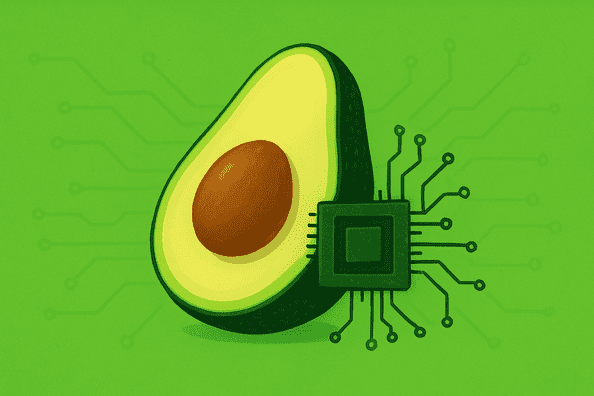
They call it the Avocado AI Model
It is a playful name for a piece of technology that is causing serious internal friction at Meta and existential dread in the open-source community. But what exactly is it? Is it just Llama 5 with a new coat of paint? Or is it, as leaks suggest, a fundamental departure from the AI philosophy Mark Zuckerberg preached for years?
In this guide, we are going to peel back the layers of the Avocado AI Model. We will explore why Meta is pivoting, what this means for the “Open vs. Closed” war, and how this technology will actually change the way you live and work in 2026.
Part I: The Fall of the Llama and the Rise of the Avocado
To understand Avocado, you have to understand the disappointment of April 2025. That was when Meta released Llama 4.
For years, the Llama series was the darling of the developer world. It was powerful, it was free, and it ran on everything from massive server farms to local gaming laptops. But Llama 4… stalled. It was good, but it wasn’t great. It didn’t crush benchmarks. It didn’t outsmart GPT-5. It felt like we had hit a ceiling.
Worse yet, the open nature of Llama became a double-edged sword. Reports surfaced throughout late 2025 that foreign military institutions were using Llama’s open architecture to train their own defense systems. The very freedom Zuckerberg championed was being weaponized.
Enter the Avocado AI Model.
Sources inside Meta, from the new Meta Superintelligence Labs (MSL), describe Avocado not as an iteration, but as a “reset.” The internal mantra has shifted from “Move Fast and Break Things” to “Demo, Don’t Memo.” The goal is no longer just to publish papers and look like the good guy; the goal is to win. And to win, Meta has decided that Avocado must be something Llama never was: Proprietary.
Part II: What Makes the Avocado AI Model Different?
Why call it Avocado? Aside from Silicon Valley’s obsession with weird code names, the metaphor is surprisingly apt. The Avocado AI Model is rumored to have a “soft,” user-friendly outer layer (the interface you and I will see in WhatsApp and Instagram) protecting a “hard,” inaccessible core (the proprietary weights and reasoning engine).
Here is the technical breakdown of what makes this model special:
-
The Death of Open Weights
This is the headline grabber. Unlike Llama, you likely won’t be able to download Avocado to your hard drive. Meta is reportedly locking the model behind its own API.
The “Why”: Safety and Profit. By keeping the “pit” of the Avocado closed, Meta prevents bad actors from stripping out safety filters. It also means if you want to use the smartest AI in the world, you have to pay Meta, not just download it for free.
-
True Agentic Behavior
Current AI models are talkers. The Avocado AI Model is a doer. Leaks suggest Avocado is built on a “Action-First” architecture.
Example: If you ask Llama 3 to “Plan a vacation,” it gives you a text list.
The Avocado Way: It has permission (if you grant it) to interface with airline APIs, hold hotel reservations for 24 hours, and draft the email to your boss asking for time off. It doesn’t just generate text; it generates state changes in the real world.
-
Multimodal Fluency
We have had image generators for years. But Avocado is being designed to compete with Gemini 3 Ultra. It doesn’t just “see” an image; it understands the physics and context within it. It can watch a video of a leaky faucet and diagnose the washer problem based on the sound and water flow, then find the correct part on a hardware store’s website.
Part III: The “Green” Controversy
The shift to the Avocado AI Model isn’t just a tech story; it’s a political one. For three years, Meta was the counterweight to OpenAI and Google. They were the ones saying, “AI belongs to everyone.”
By closing Avocado, Meta is effectively saying, “Actually, the best AI belongs to us.”
This has caused what insiders call a “cultural earthquake” at their Menlo Park headquarters. Top researchers who joined Meta specifically to work on open science are reportedly leaving. The idealism is dying, replaced by the pragmatic need to justify the $70 billion Meta is spending on GPUs this year.
The “Walled Garden” Risk
For developers, this is terrifying. Thousands of startups spent 2024 and 2025 building their businesses on top of Llama. If the Avocado AI Model is the only way to get cutting-edge performance, those startups are now at Meta’s mercy. They can’t fine-tune the model on their own private servers anymore; they have to rent intelligence by the token.
Part IV: Real-World Scenarios in 2026
Enough about the politics. If the Avocado AI Model launches in Q1 2026 as planned, what does it actually look like for you?
Scenario A: The Super-Powered Freelancer
Imagine you are a graphic designer. Currently, you use tools like Midjourney for images and ChatGPT for copy.
With Avocado integrated into the “Meta Professional Suite”:
You upload a sketch of a logo. Avocado doesn’t just digitize it; it understands the brand vibe. It auto-generates a website mockup, writes the CSS code, creates three weeks of Instagram captions, and sets up a targeted ad campaign—all in one session. It remembers your style perfectly from project to project because of its massive context window.
Scenario B: The Healthcare Advocate
The “closed” nature of Avocado might actually be a benefit here. Because Meta controls the stack, they can ensure HIPAA compliance (or its equivalent) more strictly than with an open model.
An elderly patient uses a Meta Ray-Ban smart glass device powered by Avocado. The AI listens to the doctor’s appointment, translates the medical jargon into plain English in real-time via the earpiece, and cross-references the new prescription with the patient’s existing meds to warn about side effects—something a hallucination-prone open model might be too risky for.
Scenario C: The Education Equalizer
Meta has always wanted to “connect the world.” Avocado could be the ultimate tutor.
A student in rural India doesn’t just get a textbook summary. Avocado acts as a Socratic tutor. If the student struggles with calculus, Avocado generates a custom visual analogy involving cricket (the student’s favorite sport) to explain the concept of velocity. It adapts to the student’s learning speed, not the other way around.
Part V: Is the Future Ripe or Rotten?
As we look toward the launch of the Avocado AI Model, opinions are split.
The Optimist’s View:
Avocado represents the maturation of AI. We are moving past the “wild west” phase of open experimentation into an era of reliable, safe, and incredibly capable products. If closing the model means it stops hallucinating and starts actually doing things, most consumers will happily make that trade.
The Skeptic’s View:
We are losing our agency. The Avocado AI Model consolidates power into the hands of a few billionaires. If the only top-tier intelligence available is rented from a corporation, we become dependent on their servers, their prices, and their ethics. We are trading the freedom of the Llama for the comfort of the Avocado.
Conclusion: The Hard Pit of Truth
The Avocado AI Model is more than just a software update; it is a signal that the “free lunch” era of AI is over. As we head into 2026, intelligence is becoming a premium utility, like electricity or internet access.
Meta’s pivot proves that even the biggest champions of open-source have a limit. When the stakes get high enough—when national security and trillions of dollars are on the line—the walls go up.
Is Avocado going to be the best AI we have ever seen? Probably.
Will it belong to us? No. It will belong to Meta.
And perhaps that is the most important lesson of 2025: The future of intelligence is incredibly bright, but it’s going to come with a monthly subscription fee.